Matt Neary

Read this first

Risk-Adjusted Intelligence
download-37.png

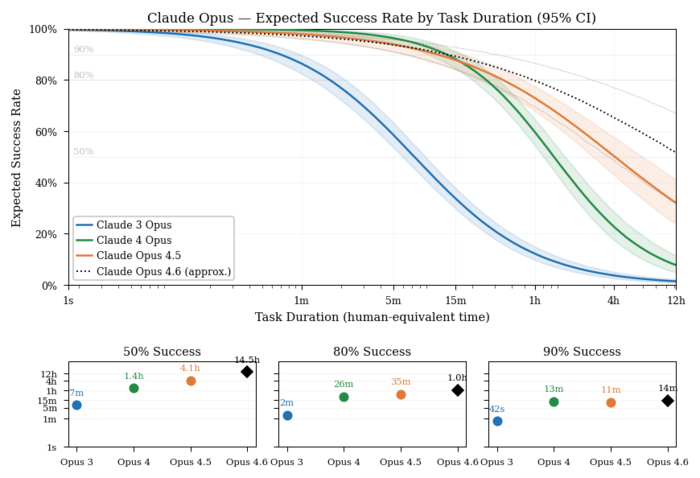
Software engineers have maintained a self-conception as highly paid, skilled tradespeople. This framework is falling apart now that the barriers to entry are disappearing. The craft is now carried out by AI — the SWE is just the capital allocator, deciding where there is ROI, liquidity risk, and room for diversification. The profession is completely different from just a few years ago. As all other aspects of software engineering now disappear into the background, its economic logic comes to the foreground.

The central challenge of capital allocation is decision-making under uncertainty. This has traditionally been outside the purview of software engineering, with engineers focusing on implementation conditioned on certain assumptions about the future. The challenge of planning around uncertainty was left to management or investors to whom a specific project or company, respectively...

Continue reading →


Magic Paper

hero.jpg

Last year, I quit my job to work on a project of my own. This was February of 2023. ChatGPT had come out in the fall of the previous year and I was thrilled by the possibilities of LLMs (I still am), but that’s not the whole story. The summer before, I revisited a pivotal influence of mine: Ted Nelson’s Project Xanadu. In short, Nelson had the idea that hypertext (a term he coined) should be baked into the substrate of word processing, not merely bolted on at publication time—and he pursued this project relentlessly through the formative decades of personal computing. That summer—before I got excited about LLMs—I began to see how establishing a few key primitives and nailing the bookkeeping of a word processor could unlock a very powerful workspace for text. In other words, I began to understand the possibilities that had tantalized Ted Nelson all those years.

The funny thing is, I...

Continue reading →


Worse Is Better

One of the coolest aspects of software development is the way it makes really big theoretical questions around system design totally accessible. Every teenager building a web app is deploying an ad hoc bureaucracy of computer processes. As you get more experience, you start to think critically about how it all fits together.

I remember reading “The Rise of Worse is Better” a decade ago. The first time I read it, it felt like a call to action. It’s the story of how less elegant designs have come to dominate the world of computing, outcompeting and rendering irrelevant so many other, more brilliant systems. I felt compelled to investigate these alternate threads of history. I wondered what the world would look like if The Right Thing had won at each step along the way to our modern tech landscape.

Toward the end of high school I started taking math at The Ohio State University. This...

Continue reading →


Why Race into Space?

apollo-anniversary-gettyimages-515392088.jpg

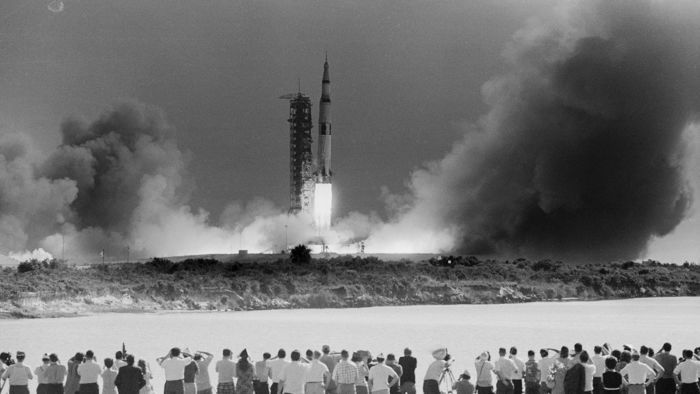
In the twentieth century space exploration reached its zenith during the Cold War. At this point, space exploration was revealed to be about two things above all. First, space was made the arena for a new sort of competition between nations. While America and Soviet Russia were engaged in a cold war, space exploration became the scale by which to measure the effectiveness of the two countries and, in fact, by which to measure the effectiveness of their respective paradigms of governance. America set out to prove that a free society will ultimately outperform a centrally-planned communist regime. This was not obvious.

Additionally, space was rightly perceived as a realm with great power for war and peace. The conquest of space as satellites were pushed into orbit around the planet was the source of great anxiety. Those countries that could do this first would gain the higher ground...

Continue reading →